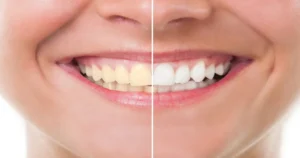

Many patients come to Wilson East Dental Care in Toronto, Ancaster, hoping to brighten their smile. They ask about whitening their teeth, especially their front teeth, and often wonder if their existing dental fillings will whiten along with their natural enamel. This is a common question, and it’s important to understand how teeth whitening works, particularly when you have composite fillings.
The truth is, composite fillings, which are made of a tooth-coloured resin, do not respond to whitening agents in the same way natural tooth enamel does. This article will explain why fillings don’t whiten, what causes them to discolour, and the effective solutions we offer to achieve a uniformly bright smile.
Why Fillings Don’t Whiten Like Natural Teeth
Natural teeth have a porous structure, allowing whitening agents to penetrate the enamel and break down stain molecules. Composite fillings, on the other hand, are made from a non-porous resin material. This material is designed to be stable and durable, but it also means that the active ingredients in teeth whitening gels, like hydrogen peroxide or carbamide peroxide, cannot change their colour.
When you undergo a professional teeth whitening treatment, your natural teeth will lighten, but any existing composite fillings will remain their original shade. This can create a noticeable colour mismatch, especially if the fillings are on your front teeth. Understanding this distinction is the first step toward finding the right solution for a brighter smile.
Causes of Discoloured Front Tooth Fillings
Even though composite fillings don’t whiten, they can still become discoloured over time. Several factors contribute to the darkening or staining of composite fillings on front teeth:
- Dietary Habits: Consuming dark-coloured foods and drinks such as coffee, tea, red wine, berries, and soy sauce can stain the surface of composite materials.
- Smoking and Tobacco Use: Tobacco products are a significant cause of extrinsic staining on both natural teeth and dental restorations.
- Age of the Filling: Over time, composite materials can absorb stains more readily and may naturally darken slightly with wear and tear.
- Poor Oral Hygiene: Inadequate brushing and flossing can lead to plaque and tartar buildup around fillings, causing them to appear discoloured.
- Surface Imperfections: Microscopic scratches or rough spots on the filling’s surface can trap pigments, leading to staining.
Identifying the cause of the discolouration helps us recommend the most effective treatment plan for you.
Your Options for a Brighter Smile with Existing Fillings
If you have discoloured fillings on front teeth, or if you plan to whiten your natural teeth and want your smile to be uniform, we have several effective solutions. The best approach depends on the current state of your finances, your desired outcome, and your budget. We will discuss each option during your consultation.
Professional Teeth Whitening for Natural Teeth
If your natural teeth are stained but your fillings are still a good match for their current shade, you might choose to whiten your natural teeth first. We always recommend professional teeth whitening because it’s safe, effective, and supervised by a dentist. Once your natural teeth reach your desired shade, we can then assess whether your existing fillings still blend in. If they don’t, we can then consider replacing them to match your newly whitened teeth.
This sequence is crucial: whiten your natural teeth first, then replace the fillings. If you replace the fillings first, they won’t change colour when you whiten your natural teeth, leading to a mismatch.
Replacing Discoloured Fillings
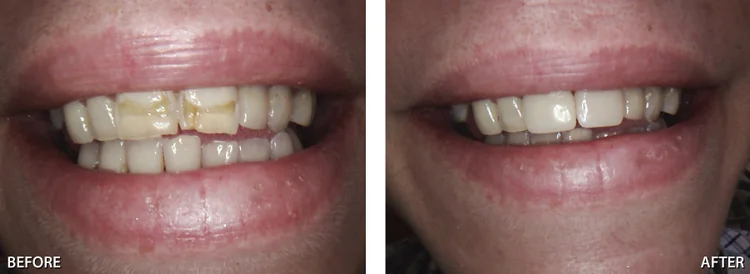
One of the most straightforward ways to address discoloured front tooth fillings is to replace them. We can carefully remove the old filling and replace it with a new composite filling that matches the current or newly whitened shade of your natural teeth. This is a common and effective restorative dentistry procedure. The cost to replace a filling varies based on its size and complexity, but it’s an investment in both your smile’s appearance and the health of your tooth.
Dental Bonding for Aesthetics
Dental bonding is another excellent option, especially for minor discolouration or small imperfections on your front teeth. This procedure involves applying a tooth-coloured resin material directly to the tooth, which is then sculpted, hardened with a special light, and polished. Bonding can cover existing discoloured fillings or blend seamlessly with your natural teeth to improve their overall appearance. It’s a relatively quick and non-invasive way to achieve a more uniform and brighter smile.
Considering Dental Veneers
For more significant aesthetic changes, or if you have multiple discoloured fillings and other cosmetic concerns on your front teeth, dental veneers might be the best choice. Veneers are thin, custom-made shells typically crafted from porcelain or composite resin. They are bonded to the front surface of your teeth, completely transforming their colour, shape, size, or length. Veneers offer a durable and highly aesthetic solution for achieving a dramatically brighter and perfectly uniform smile, effectively covering any existing fillings or discolouration.

Maintaining Your Bright Smile
Once you’ve achieved your desired smile, maintaining its brightness and the longevity of your restorations is key. Good oral hygiene habits are essential. Brush your teeth twice a day with a fluoride toothpaste and floss daily to prevent plaque buildup and staining.
Limiting your consumption of highly staining foods and drinks can also help. If you do consume them, rinse your mouth with water afterwards. Regular dental checkups and teeth cleanings are vital. These appointments allow us to polish your fillings, remove surface stains, and ensure the health of your entire mouth.
The Healthline dentists have also talked about the longevity of whitenings in a way that your teeth naturally yellow as you age, but you have to prevent staining in several ways, like regular brushing, decreasing sugar intake and also limiting some foods and beverages.
Professional Polishing for Stained Composite Fillings
In some cases, minor stains on composite fillings can be improved with professional polishing instead of replacement. Dentists use specialized polishing tools to smooth the filling surface and reduce discoloration caused by coffee, tea, smoking, or plaque buildup.
However, polishing only helps with surface stains. If the filling has deep discolouration or no longer matches your natural teeth after whitening, replacing the filling may be the better cosmetic solution.
A dental exam can help determine whether polishing or replacement will achieve the most natural-looking result.
Still Can’t Choose The Best Treatment?
If you want to improve the appearance of fillings on your front teeth, visit Wilson East Dental Care for expert cosmetic dental care. Our team will help you explore the best treatment options to create a brighter and more natural-looking smile.
Ready for a Brighter Smile?
Achieving a bright, uniform smile when you have existing fillings on front teeth is entirely possible. It simply requires a thoughtful approach and professional guidance. Whitening treatments can improve the colour of natural teeth, but fillings often require different cosmetic solutions to match your smile evenly. Understanding your options and working with a dental professional can help you achieve a more confident and balanced appearance.
At Wilson East Dental Care, we are here to help you understand your options and choose the best path forward. We provide comprehensive restorative dentistry and cosmetic solutions, ensuring your smile looks its best. Don’t hesitate to reach out with your questions or to explore how we can enhance your smile. We look forward to welcoming you.
FAQ
-
Can I use over-the-counter whitening products on my teeth if I have fillings?
While over-the-counter products can whiten natural teeth, they will not change the colour of your composite fillings. Using them can lead to uneven whitening, where your natural teeth become brighter while your fillings remain the same shade. We always recommend consulting with us before starting any whitening regimen.
-
How long do composite fillings typically last before they need to be replaced?
Composite fillings generally last between 5 to 7 years, but with proper care and good oral hygiene, they can last longer. Factors like diet, clenching or grinding habits, and the location of the filling can influence its lifespan. Regular dental visits allow us to monitor the condition of your fillings.
-
Is replacing a filling painful?
We use a local anesthetic to ensure you are comfortable throughout the procedure. Replacing a filling is a routine dental procedure, and most patients experience little to no pain during the process. You might feel some sensitivity afterward, which usually subsides quickly.